Integrative Psychotherapy
for individuals
Online throughout California

About you
You want to strengthen your relationships. Change unhelpful patterns of thinking and behavior. Accept yourself without shame or judgement. Identify and see through layers of cultural programming to uncover your inner truth. Allow yourself to be loved. Live from a more intentional place, where mind, body, and soul are more in alignment and integrity with one another. These changes take courage and are no doubt difficult. It is essential to have support along the way.
My clients are individuals of all ages who are seeking therapy to address issues involving relationships (including friendships, romance, sex, etc.), codependency, perfectionism, anxiety, depression, addictive behaviors, religious and intergenerational trauma, and stage of life confusion.
About me
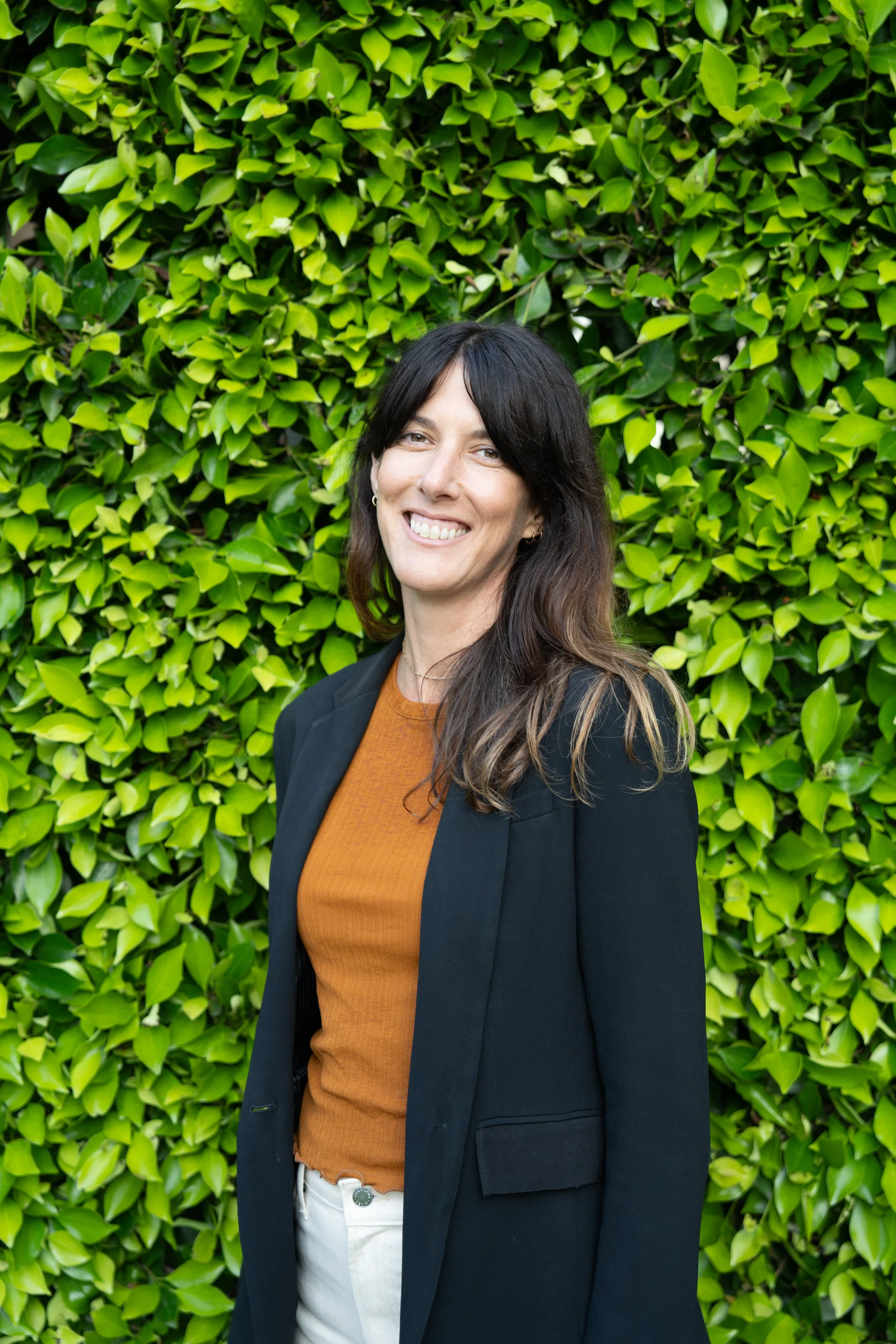
I am a licensed psychotherapist with a focus on Psychodynamic, Somatic, and Eco -Psychotherapies. I am affirming of all identities, genders, and sexual and religious orientations.
In my free time, I enjoy playing guitar, singing, reading, and spending time in the woods covered with leaves.
Trainings/Memberships
MA Counseling Psychology, Pacifica Graduate Institute
Los Angeles Institute and Society for Psychoanalytic Training, Student Society Member
Training: Mirroring the Four Shields of Human Nature, School of Lost Borders
Advanced Training Certificate: Eco-therapy, Pacifica Graduate Institute
100-hour Yoga Nidra Certification
200-hour Yoga Alliance Certified Teacher Training



“And we are put on earth a little space, that we may learn to bear the beams of love.”
-William Blake
How Therapy Can Help You
We are born inextricably bound to systems. For better or worse, we are created and reflected and created again within the systems in which we live. Our family of origin, our neighborhood, our schools, and the mainstream culture have all contributed to our development and to who we have become.
And yet, in order to survive, emotionally and, sometimes, physically, some of us early on needed to adapt in order to fit into the systems around us. For some this meant pretending to be someone else entirely; for others, this meant dimming our lives and our lights, our creative interests and expressions. In service of the biological and evolutionary need to belong, we ceased to belong to ourselves.
Some people live in this dim false-self state of inauthenticity their entire lives. Others have a gnawing sense at some point that something is in fact not okay. This may show up as increased anxiety and fear, or compulsive behaviors and addictions. This may show up in the form of codependent relationships. This may show up in the body as increased tension and chronic pain.
After awhile, these necessary but ultimately destructive adaptations may feel unsustainable, and, as a result, an individual begins to seek a new way of being. A person is called to pay attention to an inner calling, however faint. Often, answering this call means walking away, literally or metaphorically, from the systems which, up until now, had kept them “safe”.
By committing to your own authenticity, you can develop the courage and strength to walk the sometimes lonely path toward true belonging. However, this path is not for the faint of heart, and it can be helpful to have a guide to walk along with you. Therapy provides a space for this to happen.
↓
Offerings
-
Psychodynamic psychotherapy is a type of therapy that takes into account the influence of the unconscious on one's thoughts, behaviors and experience of the world. Therapy from this perspective can help with a variety of problems, such as understanding motivation and procrastination; confusion about big decisions; and/or feeling stuck and trapped in toxic cycles of addiction and self-destructive behaviors. Through interventions that acknowledge another intelligence beyond what we think we know, a person can arrive at more creative solutions and a greater self-awareness and understanding.
-
Acceptance and Commitment Therapy, or ACT, is a form of therapy that is aligned with some core aspects of secular Buddhism. It can help with disorders that result from rigid thinking, such as anxiety, depression, and obsessive-compulsive disorder. ACT interventions aim to develop psychological flexibility through six key processes, including defusion (creating some space from thoughts rather than immediately identifying with them); acceptance; attention to the present moment; self-awareness; identification of personal values; and committed action to living out those values.
-
Through increasing awareness of the “felt sense” of internal physical sensations, an individual can both become more present in their body and become more in touch with moment-to-moment experience, likes and dislikes, what makes them feel alive and expansive and what makes them feel contracted and closed off. By practicing this continued attention to body sensation both within sessions and throughout daily life, a person can become more attuned to who they are.
-
Eco-therapy is a developing form of psychotherapy that acknowledges humanity's inseparability from nature and uses nature-based practices and metaphors to promote healing and move toward wholeness. Eco-therapy interventions offer ways to see above, beyond, and underneath harmful cultural messages and programming and can help an individual heal from disorders of individualism, such as narcissism, addiction, and body dysmorphia. Eco-therapy can help an individual remember that they are an essential part in the larger relational web of their environment and their communities.
Eco-therapy can be incorporated into virtual sessions, or, if logistically possible, we can work together outside with the natural world as co-therapist. We can discuss this offering in more detail if you are interested.